
La Serena, land of plains and water
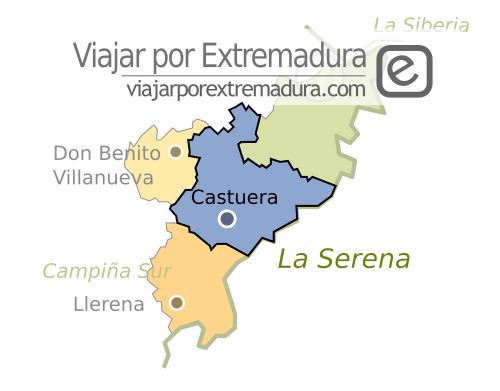
La Serena is a wide plain in eastern Badajoz province, known for its large reservoir, its birdlife, its cheeses, and the Tartessian site of Cancho Roano.
The name of this region comes from the Arab term serna, meaning plain or open country. In Spanish, serena means “calm” or “peaceful”, a fitting name for the area.
The contrast between large granite, quartzite, and slate plains and the pastures where livestock graze creates a unique landscape. Holm oaks grow on the low hills, and in spring and autumn the fields change color.
A wide variety of birds live here, and you can watch them, mainly in autumn. The large reservoirs in eastern Extremadura are a paradise for birds. La Serena is a Special Protection Area for birds (ZEPA), so it is a great place for birdwatching.
The La Serena reservoir is one of the largest in Spain.
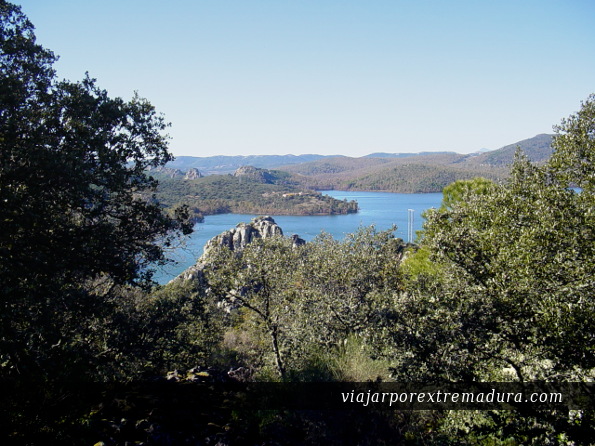 Landscapes of La Serena
Villanueva de la Serena is one of the natural doors to the area through the EX-104 road. It is one of the most industrialized cities in the area and in Extremadura. That industry coexists with its past: you’ll find a great number of churches such as the Capilla del Santo Sepulcro, convents, and stately homes such as Casa de los Bolos or La Jabonera. You can admire their facades while out for a walk.
Following the EX-104 road we get to Campanario. This town is famous for the Virgen de Piedraescrita Pilgrimage. On Easter Monday the inhabitants of Campanario celebrate this feast, which has been declared a Celebration of Interest by the Regional Government of Extremadura. People get involved in the celebration, adorning carriages with colorful elements and going out in them on the day of the pilgrimage.
We head south to reach the archaeological sites in Quintana de la Serena and Zalamea de la Serena.
In Quintana de la Serena you can see the pre-Roman settlement of Hijovejo.
Zalamea de la Serena preserves its Tartessian legacy in Cancho Roano settlement. It is the best-preserved Tartessian archaeological site in Spain.
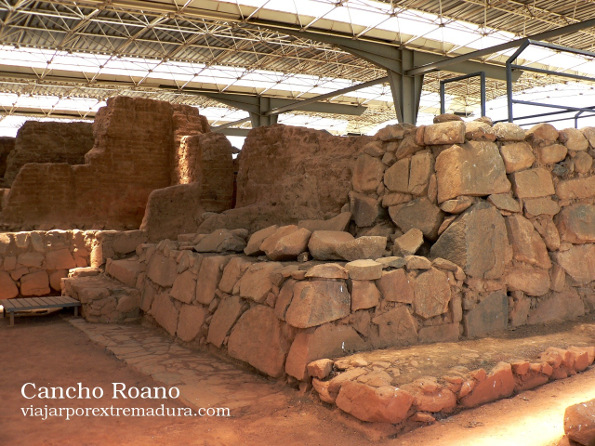 Cancho Roano, Tartessian archaeological site
Just into the town of Zalamea de la Serena there is a Dystilo, a Roman column, 23 metres high. This is the only dystilo in Spain.
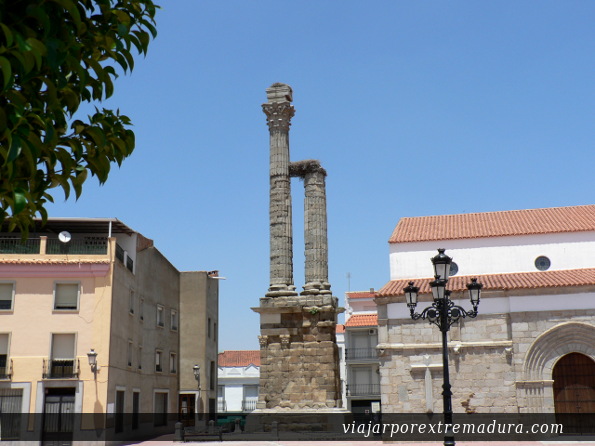 Roman Dystilo in Zalamea de la Serena
Heading east we have to make a stop in Castuera. This town produces delicious products such as the well-known cheese. Besides, the nougat candy made here is famous all over Spain. Castuera is one of those small towns where time has stopped, making the traveler take their time and enjoy its delicacies.
Following the EX-104 road we reach Cabeza del Buey. On the road we may find Benquerencia de la Serena, La Nava or Helechal; these towns are full of narrow streets that invite you to go for a walk through them. Moreover, their inhabitants welcome everyone who goes there.
Cabeza del Buey is a small town whose main activities are livestock farming and olive trees. Together with Monterrubio and Benquerencia they produce Aceite de Monterrubio, a special variety of olive oil.
This town was under the rule of the Great Order of Alcantara. As a proof of this historical past, a great amount of religious buildings or the military fortress-like Almorchon Castle stand out.
Near Cabeza del Buey is Peñalsordo, a small town known for the Octava del Corpus festival. From here you can reach the great reservoirs of La Serena, impressive engineering works set in a wide landscape.
How to get there
La Serena is in eastern Badajoz province, about 1 hour 30 minutes by car from Mérida and Badajoz. The main towns are Villanueva de la Serena, Castuera, and Cabeza del Buey.
Where to stay…
- Hotel Cortijo Santa Cruz in Villanueva de la Serena
- Hotels near Zalamea de la Serena